Dr. Tom's Corner
Dr. Tom Watschke is a professor emeritus of turfgrass science at Penn State University. Dr. Watschke is an expert in turf nutrition and has spent much of his career studying and evaluating biostimulants and plant growth regulators and their effects on turfgrass management.
October 2008 Installment
Question: Dr. Tom, Are biostimulants for real? And if so, what are they and should I use them?
Dr. Tom: Many superintendents seem to have questions surrounding biostimulants. There appears to be some confusion and / or skepticism in the field surrounding the subject. Some superintendents were exposed to them in school while others may have little to no exposure to the topic.
To answer your first question, YES! They are very much ‘real!’ And they have been researched for some time. There is a very nice paper that I would recommend you reading on the subject. It is
“Answers to Some Questions Golf Course Superintendents Have Concerning the Use of Biostimulants”
by R.E. Schmidt and E.H. Ervin, Professor Emeritus and Assistant Professor, respectively, Turfgrass Ecology and Physiology, Virginia Polytechnic Institute.
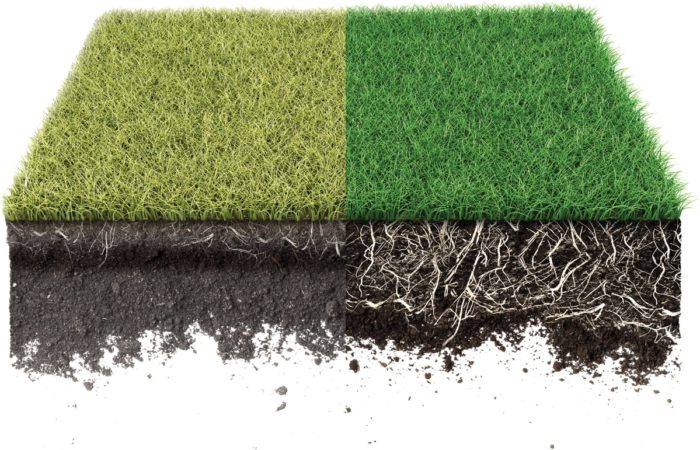
In this paper, they say “Our research has documented that applications of (biostimulants) have conditioned turfgrasses to tolerate environmental stresses and improve grass growth, particularly root development.” From my experience and based on my colleagues research, I can say again, yes, biostimulants are for real.
To your second question, ‘what are they?’, in very simple terms and as the aforementioned paper highlights biostimulant properties can be found in seaweed extracts, humic acids, and triazole fungicides among others. While the content of each varies, research shows that seaweed and humic acid are two the most commonly used biologically active ingredients, and even then the sources of each need to be examined closely.
Most relevant to you as a superintendent managing turf in very demanding conditions, Schmidt and Ervin state “Biostimulants enhance plant metabolic activity to condition the plant to tolerate stresses. Therefore biostimulants have a greater impact when applied prior to the turf being subjected to anticipated stress.” This is obviously something you need to consider when planning your turf nutrition program. Biostimulants should be viewed as a proactive step in managing healthy turf as Professors Schmidt and Ervin point out: “… better results are obtained when sequential treatments are made and the second year is better than the first. Monthly applications prior to and during the stress periods (three to six applications per year) should be programmed....”
As managers of ‘extremely maintained’ turfgrass , you face myriad stresses along with your turfgrass! There are cultural practices and environmental pressures that put extreme stress on your turf. There are budgetary and player demands that put extreme stress on you. I am a proponent of ‘getting ahead of the curve’ through proactive nutrition practices instead of getting caught in ‘reactive’ mode. I think biostimulants, as part of a comprehensive turf nutrition program, can go a long way in helping superintendents relieve two stresses: their turf’s and theirs!
Until next time, Dr. Tom wishes you strong root mass and safe travels!!